
**Trump and Xi to Hold Summit in South Korea During October APEC Meeting**
*First U.S.-China Summit of Trump’s Second Term May Shape Global Economic Order*
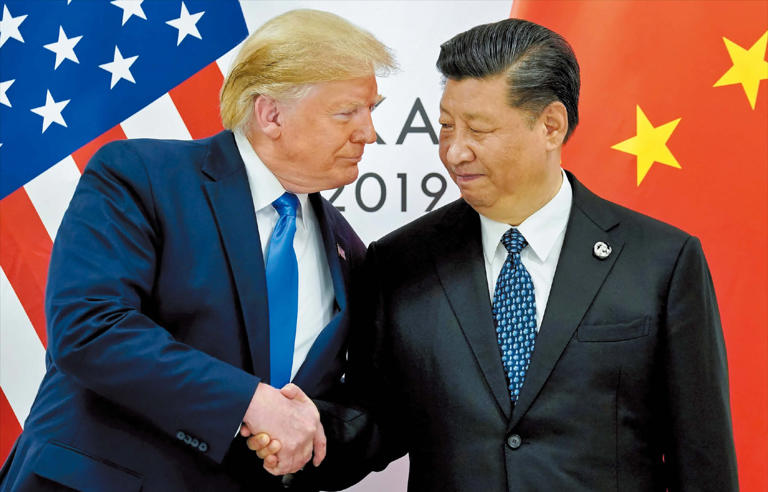
U.S. President Donald Trump and Chinese President Xi Jinping are set to visit South Korea in late October for the Asia-Pacific Economic Cooperation (APEC) summit in Gyeongju, where they are expected to hold a high-stakes bilateral meeting. This summit marks the first official U.S.-China summit of Trump’s second term and could provide a breakthrough in resolving one of the world’s most critical geopolitical issues—the ongoing U.S.-China trade war.
South Korea’s Presidential Office welcomed the news on the 21st, stating, “We welcome the U.S.-China summit being held in South Korea,” and confirmed it would offer “maximum support” for the event.
Trump announced the meeting shortly after a phone call with Xi on the night of the 19th—their first direct communication in three months. The upcoming summit will be their first face-to-face meeting in nearly six years, following the G20 summit in Osaka, Japan, in June 2019. It will also be the first time in 13 years that both U.S. and Chinese leaders will visit South Korea at the same time—the last occasion being the 2012 Nuclear Security Summit in Seoul attended by former U.S. President Barack Obama and then-Chinese President Hu Jintao.
Separate bilateral summits between South Korea and each visiting leader are also being arranged, with Xi’s visit potentially being upgraded to a formal state visit—his first to South Korea since 2014.
— South Korea Set for Its Biggest Diplomatic Event in Years
With South Korea selected as the host for the first Trump-Xi summit of the president’s second term, international focus on the Gyeongju APEC summit is intensifying. China had initially pushed for Trump to visit Beijing either before or after the APEC meeting, aiming to use high-level hospitality to gain concessions on tariff negotiations. However, after their recent phone call, Trump announced on social media that he would instead meet Xi at the APEC summit, adding that a visit to China would follow “early next year.”
This development effectively makes the Gyeongju summit the centerpiece of U.S.-China diplomatic engagement in 2025.
— Key Issues: Tariffs, TikTok, Fentanyl, and the Ukraine War
Trump outlined several major agenda items in his post-call remarks, including progress on trade, fentanyl, the Ukraine conflict, and the U.S. approval of a TikTok sale. The ongoing tariff dispute remains central. Both sides have extended temporary tariff reductions until November and have been renewing a “truce agreement” every 90 days—reducing tariffs by 115 percentage points and resuming Chinese rare earth exports to the U.S.
Given Trump’s preference for top-level diplomacy, observers expect him to seek direct and decisive outcomes with Xi. However, fundamental disagreements between the two nations could make a comprehensive deal elusive.
China’s state-run Xinhua News Agency described the Trump-Xi phone call as “constructive,” but stressed that the U.S. must refrain from unilateral trade actions. If an agreement is not reached in South Korea, final negotiations may be deferred to Trump’s planned China visit early next year.
The future of TikTok also looms large. Trump claimed, “The TikTok deal is essentially approved,” and noted that the algorithm ownership issue is being resolved. Xi, however, remained cautious, emphasizing respect for corporate decisions and compliance with Chinese law. The U.S. enacted a law last year mandating the sale of TikTok to an American firm, though enforcement has been delayed as negotiations continue.
On fentanyl, Trump highlighted the importance of China’s cooperation in addressing America’s opioid crisis. Xi has not made an official statement on the issue, but it’s expected to come up in future discussions.
Regarding the Ukraine war, Trump expressed optimism: “I believe President Xi also wants to end the war and will work with the U.S.” While the U.S. has criticized China for indirectly supporting Russia, it remains unclear whether Beijing will take a more active role in peace efforts.
— Xi’s Visit May Include Full State Honors
A senior official from the South Korean Presidential Office said, “If President Xi comes to Gyeongju, a South Korea-China summit will naturally follow,” adding that President Trump’s visit will also lead to a South Korea-U.S. meeting. This would mark Xi’s first visit to South Korea in 11 years—his last being a state visit in July 2014 at the invitation of then-President Park Geun-hye.
Tensions over the THAAD missile defense system and other geopolitical frictions have kept Xi away since then, despite former President Moon Jae-in’s two visits to China during his term.
Seoul is currently exploring the option of hosting Xi for a full state visit separate from his APEC attendance. If confirmed, it would include a formal airport welcome, military honors, a state banquet, and potentially a speech at the National Assembly.
Trump’s visit will be his first to South Korea since the 2019 inter-Korean-U.S. summit at Panmunjom. The upcoming South Korea-U.S. summit is expected to cover a wide range of topics, including tariffs, visa policies, and security cooperation.


